 Anna Nuzhna
Blog
Articles on psychology, relationships and self-care

Personality adaptations in TA: why we react differently
Personality adaptations are ways of thinking, feeling, and acting that once helped us meet the world. They are not fixed character traits, but patterns we can learn to notice and expand.
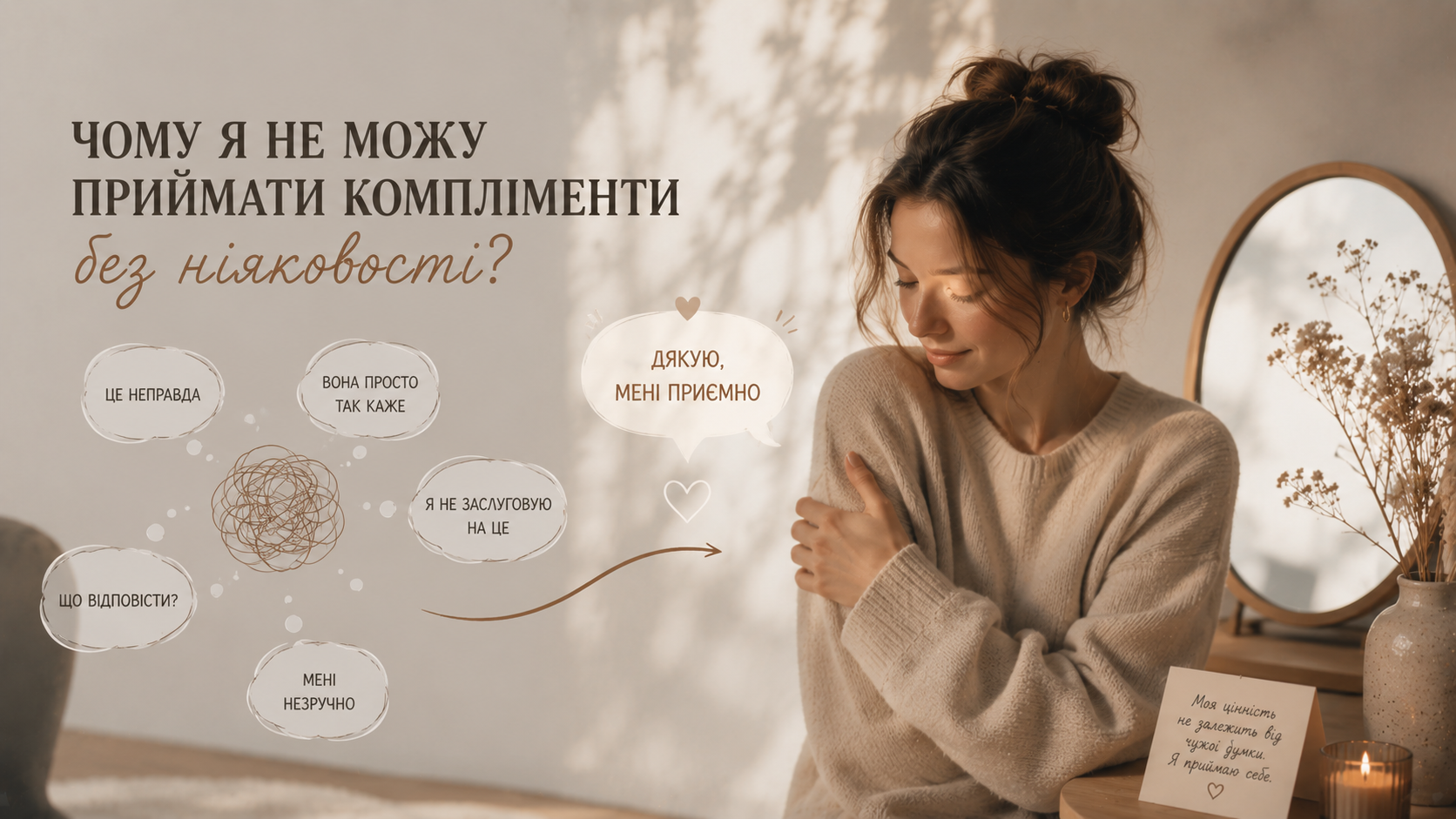
Why I Can’t Accept Compliments Without Awkwardness
A compliment may sound pleasant, yet something inside suddenly tightens: you want to argue, make a joke, or disappear. This is not a whim, but a familiar way of protecting yourself.
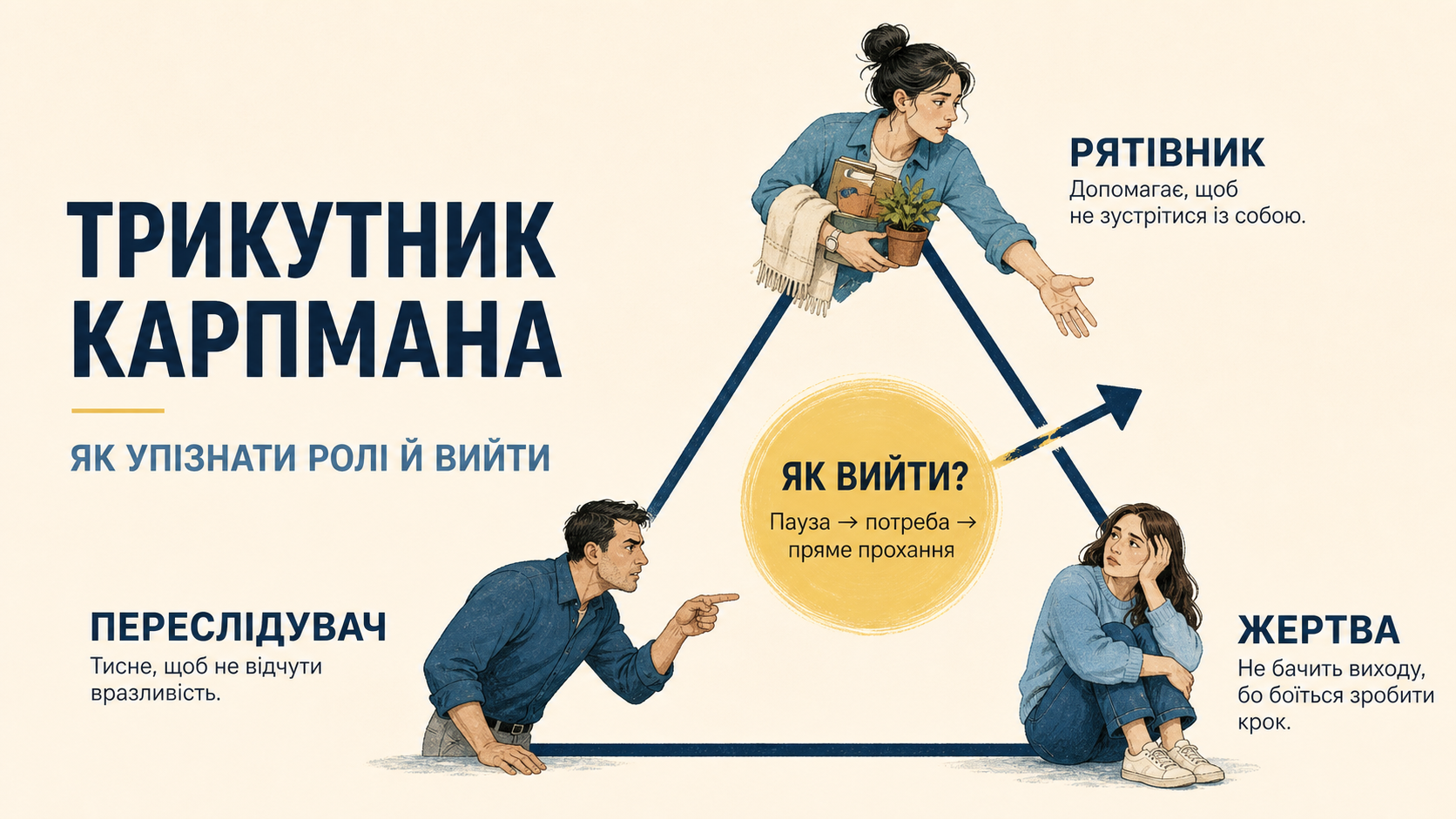
Karpman Drama Triangle: how to recognize your role
One person rescues, another feels hurt, a third starts attacking — and an hour later no one remembers where it began. The Karpman Drama Triangle gives this pattern a name and points toward a way out.
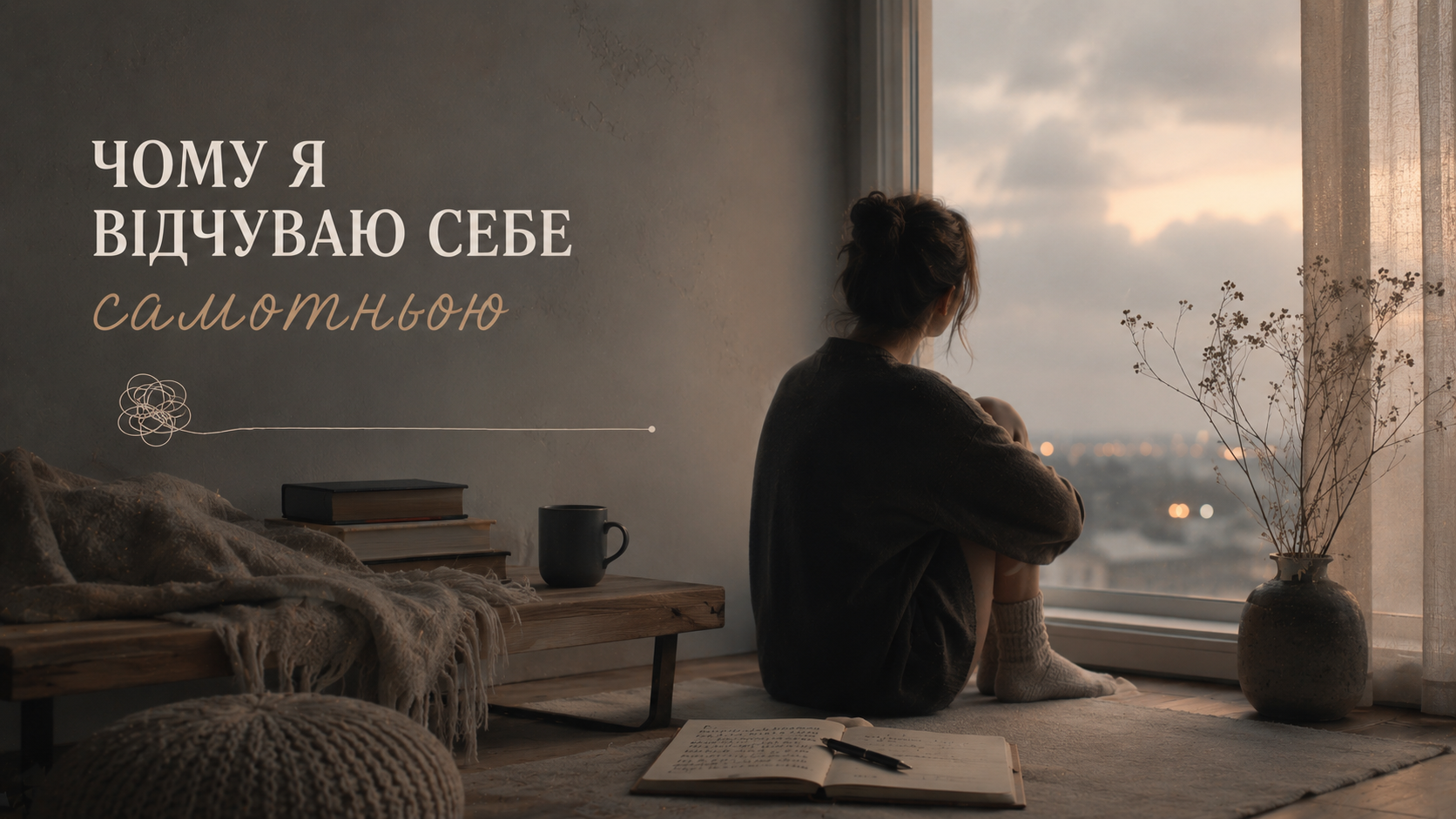
Why I Feel Lonely Even When I’m Around People
Loneliness can appear even when close people are nearby. I write about how to tell apart a lack of contact, tiredness from roles, and the need to return to yourself.
Why do I apologize so much when I did nothing wrong?
Over-apologizing can look like politeness, but inside it may be a way to prevent rejection. This is a gentle look at the habit without blaming yourself for it.

How to say no without feeling guilty and keep boundaries
Saying no can feel simple in theory and frightening in real life. I write about guilt, ego states, and phrases that help keep boundaries with parents and at work.
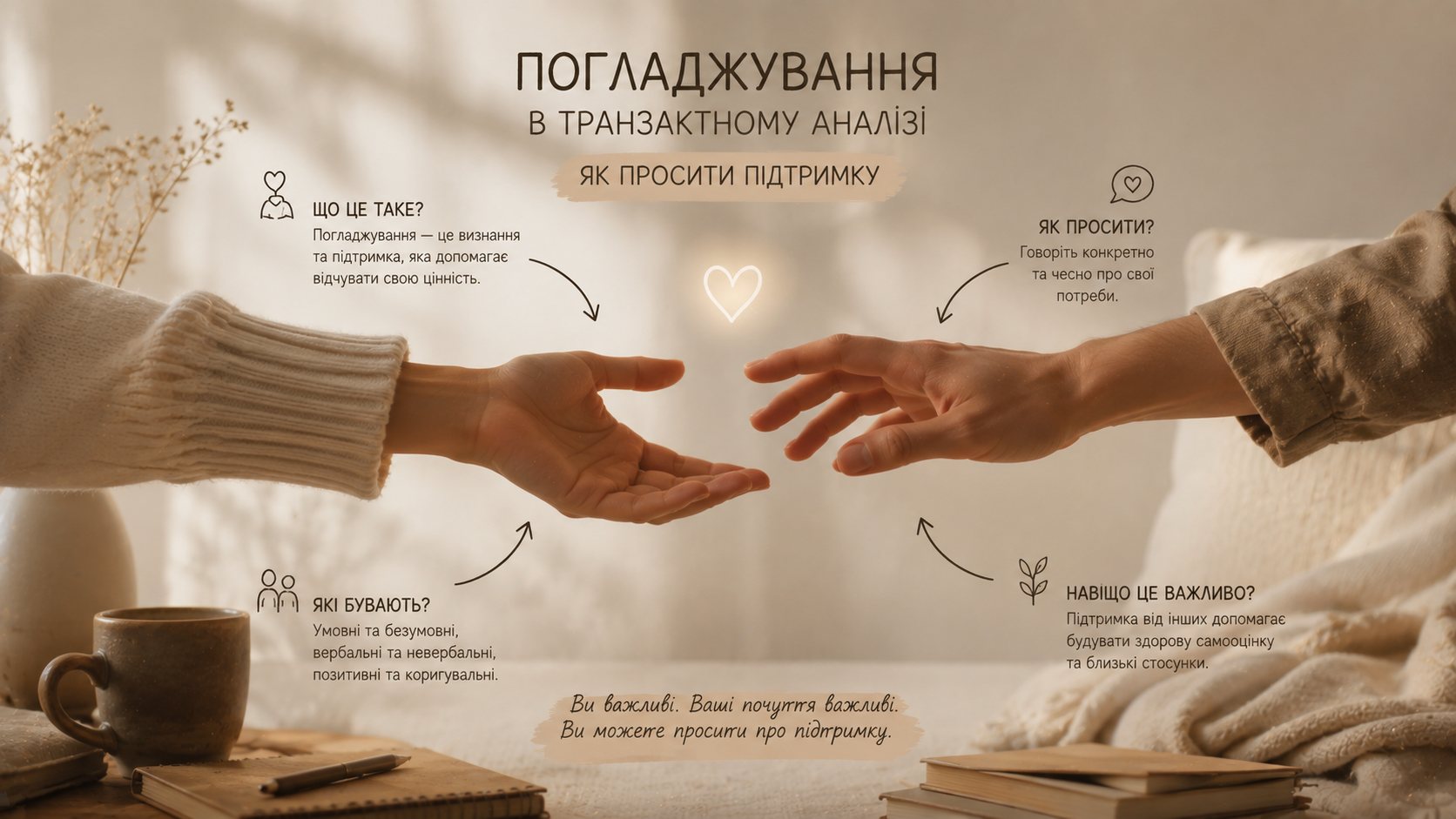
Strokes in transactional analysis: how to ask for support
Recognition is not a childish demand for praise. It is one of the ways we feel seen, connected, and emotionally nourished.

Fear of intimacy in relationships: signs and first steps
Fear of intimacy can look like coldness, doubt, or the urge to disappear after warm contact. It is something you can speak about without shame or self-criticism.

Love or emotional dependency: how to feel the difference
Sometimes a relationship is not obviously destructive, but inside it holds a lot of anxiety alongside love. I suggest looking not at the strength of feelings, but at the freedom to remain yourself.