 Anna Nuzhna
PTSD: what it is, symptoms, and when to seek help
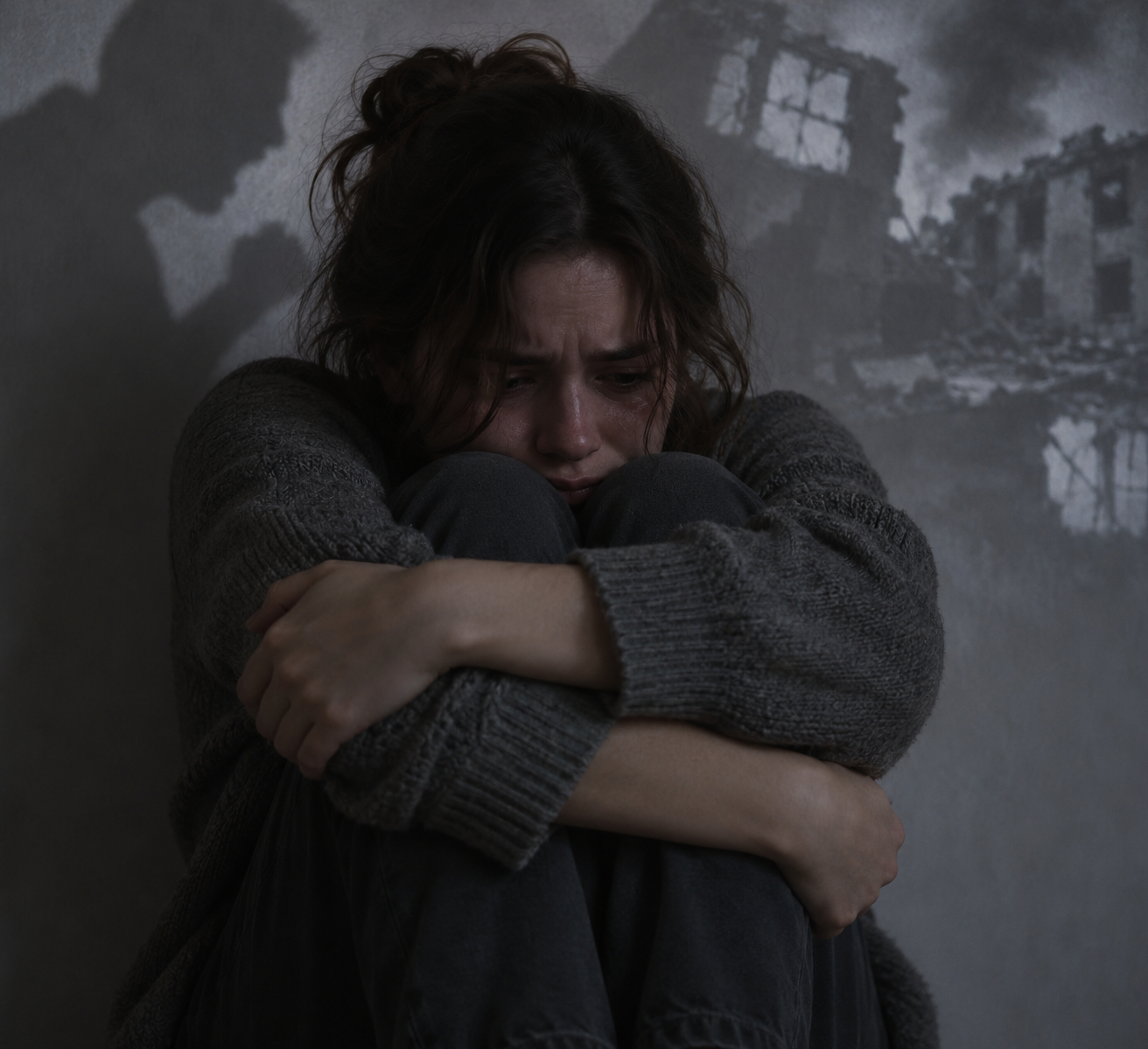
PTSD: what it is, symptoms, and when to seek help
“I get scared by loud sounds for no clear reason.” “I keep having the same dreams again and again.” “I can’t watch the news because panic rises immediately.” “I feel constantly on edge, even at home, even when nothing is happening.” These kinds of phrases are often explained away as “just stress” or “I should be stronger by now,” although they may point to PTSD, post-traumatic stress disorder.
What PTSD is
PTSD is not weakness and not a sign that someone “didn’t cope well enough.” It is the mind’s response to an event that exceeded its ability to process what happened at its usual pace. The psyche has not fully “closed” that experience, so it continues to show up in the body and behavior as if the threat is still present, even when it has already passed.
It can develop after combat experience, shelling, being forced to leave home, physical or sexual violence, an accident, the sudden loss of a loved one, serious illness or a medical procedure, or witnessing someone else’s death or danger. The event does not have to be “the worst thing imaginable” to leave such a mark: the psyche responds to the subjective feeling of threat, not to an outside assessment of how serious the event was.
Main symptoms
Intrusive experiences. Memories that arise on their own, without invitation. Nightmares on the same theme. Flashbacks, when for a moment it feels as if the event is happening again here and now, not in memory.
Avoidance. Conscious or half-conscious avoidance of places, people, conversations, news, even smells or sounds that remind you of the event. Sometimes this avoidance quietly narrows a person’s whole life: they stop taking certain routes, avoid certain topics in conversation, give up things they used to love.
Negative changes in thinking and mood. A sense of emotional numbness, as if feelings have become muted. Persistent guilt, often out of proportion to what the person could actually control. Beliefs such as “the world is dangerous” or “I can’t trust anyone anymore.” Loss of interest in things that used to bring pleasure.
Increased arousal. Constant alertness, even in a safe environment. A sharp reaction to unexpected sounds or movements. Difficulties with sleep, concentration, and irritability that appears without an obvious reason.
When it is PTSD and when it is a natural stress response
In the first weeks after a difficult event, acute stress is a normal reaction, and similar symptoms can appear in almost anyone who has lived through something frightening. PTSD is usually considered when symptoms last longer than a month, do not ease with time, and noticeably interfere with working, communicating, sleeping, or simply functioning in a familiar rhythm. There can also be a delayed form, when symptoms appear not immediately after the event, but months or even years later.
PTSD test
If you would like to get an approximate sense of your state, the website has a PTSD test (PCL-5), a free screening for post-traumatic symptoms that takes a few minutes. It does not diagnose and does not replace a consultation with a specialist, but it may help you understand whether this deserves more attention and can become a starting point for a conversation in therapy.
If there is an acute crisis right now
If you are having thoughts that there is no point in living, or you do not feel safe right now, this is a reason to seek help immediately rather than wait for a regular appointment. In that case, it is worth contacting a crisis line, the nearest medical facility, or a trusted person nearby.
What helps with PTSD
Psychotherapy remains the main and most studied way to work with PTSD. Work with traumatic experience is built gradually and at a safe pace: the aim is not to “make you relive” the event, but to help the psyche finally process what happened so that the memory no longer lives in the body as a current threat. At the beginning of therapy, the focus is usually on stabilization and restoring a sense of safety, and only later, when the person is ready, it becomes possible to work directly with the event itself.
Alongside therapy, regular sleep and movement can help, as well as connection with people you can trust and a return to routine at a pace that is genuinely possible, without demanding that you immediately “get back to normal life.”
Common questions
Can PTSD be managed without therapy? Milder symptoms sometimes ease on their own with time, especially with support from close people and a safe environment. But if symptoms last for weeks or months and interfere with life, professional help can make this process much easier and quicker.
Does PTSD happen only after war or violence? No. It can follow any event that was subjectively experienced as a threat to life or integrity, including accidents, serious illness, the loss of a loved one, or medical procedures.
How long does PTSD therapy take? It depends on the depth of the experience, the number of traumatic events, and the person’s individual pace. For some people, noticeable relief comes within a few months; for others, the process is longer, and that is normal.
PTSD does not mean that something is “wrong” with a person or that they are not strong enough. It is a trace left by an event that was truly difficult, and with that trace it is possible to learn to live and gradually let it go.
I work with traumatic experience and its consequences in individual therapy, online and offline in Dnipro. You can see the formats of work on the services page, and you can start with a free introductory meeting.

Want to explore what's on your mind?
The first intro meeting is free: 15–20 minutes online to get acquainted and see whether we would be comfortable working together.