 Anna Nuzhna
Panic attack: what to do when it feels like dying
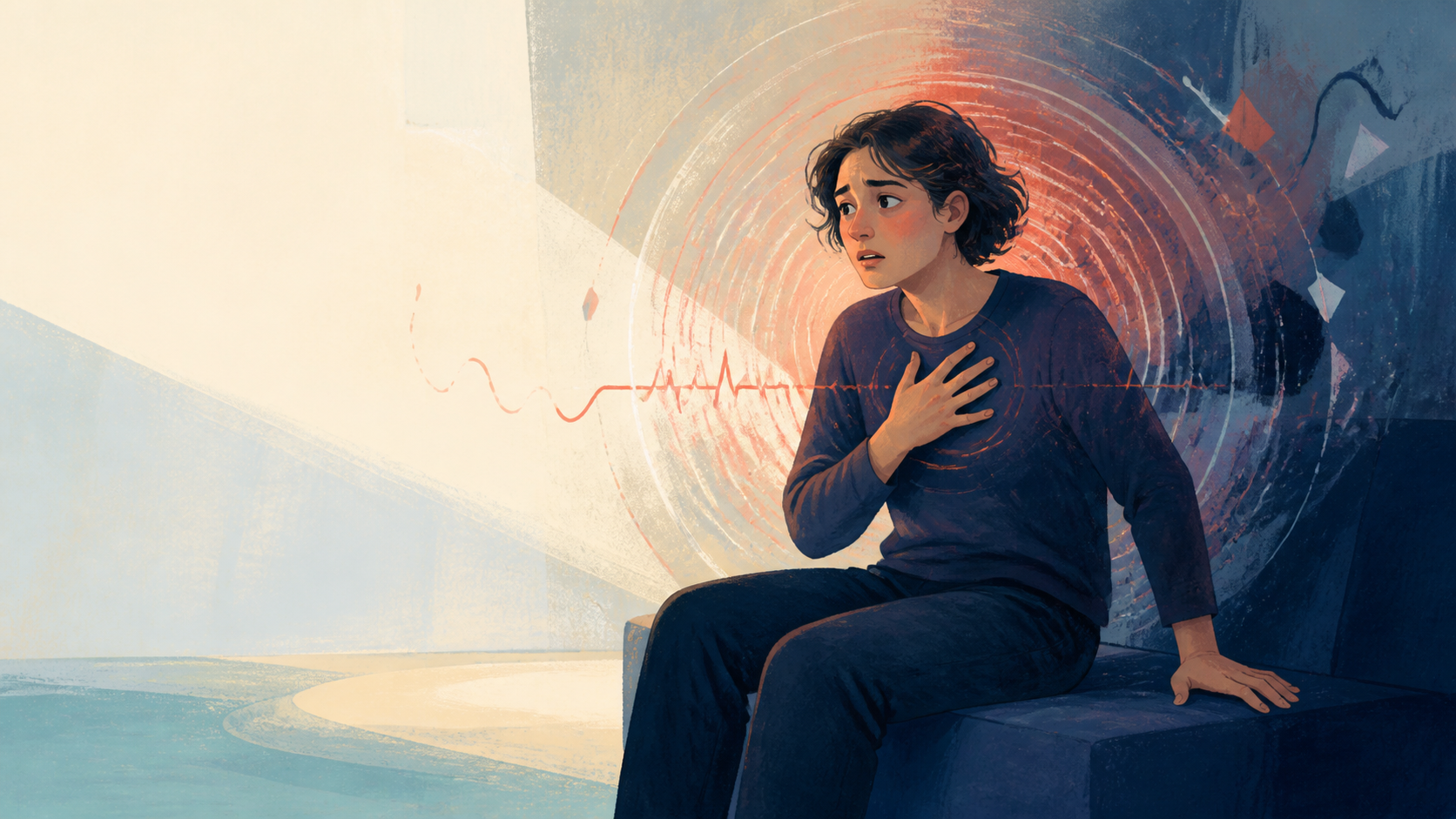
Panic attack what to do is a search people often type with shaking hands, a racing heart, and one frightening thought: something terrible is happening to me. If this is familiar, I want to say it gently and clearly: a panic attack can feel dangerous, but the attack itself is not the same as dying or losing your mind.
In my practice, people often describe the first episode as the most terrifying one. The body suddenly becomes loud: the chest tightens, breathing changes, fingers tingle, the room feels unreal. The mind tries to explain it quickly and reaches for the scariest explanation. This is how the loop starts: the stronger the fear, the louder the body; the louder the body, the more the fear grows.
This article is not a substitute for medical care or psychotherapy. If symptoms are new, unusually strong, connected with chest pain, fainting, injury, substances, pregnancy, or a known heart or neurological condition, it is safer to contact a doctor or emergency service. And still, when panic is the cause, there are simple ways to help your nervous system come down.
What happens in the body during a panic attack
A panic attack is an intense activation of the body’s alarm system. The nervous system reads something as a threat. Sometimes there is an obvious trigger: a crowded metro, a conflict, a memory, lack of sleep, too much coffee. Sometimes the trigger is not clear at all, and that makes the experience even more confusing.
The body prepares for action. Adrenaline rises, the heart pumps faster, muscles tense, breathing becomes quicker. Blood is directed to areas that would help you run or fight. Digestion slows down. The brain becomes more alert to danger. These reactions are uncomfortable, but they are not random: they are the body trying to protect you.
The problem is that during panic the alarm is too strong for the real situation. You may be standing in a supermarket queue, sitting at your desk, or lying in bed, while your body behaves as if danger is right in front of you. The Adult part of the psyche may understand that nothing visible is happening, but the scared Child part experiences it as an emergency.
Why it feels like I am dying
The thought I am dying often appears because panic symptoms resemble things we were taught to treat seriously: a pounding heart, shortness of breath, dizziness, tightness in the chest. The mind looks for a cause, and the most frightening one comes first. This is not stupidity or weakness. This is a nervous system trying to make sense of intense sensations.
There is also a physical reason. When we breathe too quickly or too shallowly, the balance of oxygen and carbon dioxide shifts. This can cause tingling, numbness, dizziness, a feeling of unreality, and more fear. Then the fear increases breathing again. A closed circle forms.
It can help to use one short sentence as an anchor: This is panic. It is very unpleasant, but it will pass. The sentence does not need to convince you completely. It only needs to create a small gap between sensation and catastrophe. In transactional analysis, I often think of this as inviting the Adult ego state back into the room: the part that can notice, name, and choose the next step.
First self-help protocol: what to do in the moment
When panic rises, long explanations rarely work. The body needs simple, repeated signals of safety. You can save this protocol in your phone and read it slowly when needed.
- Name what is happening. Say quietly or in your mind: I am having a panic attack. My alarm system is activated. This will pass.
- Put both feet on the floor. Press your toes and heels into the ground. Notice the support under you: floor, chair, wall, bed.
- Slow the exhale. Do not force a deep breath if it makes things worse. Try a gentle inhale through the nose and a longer exhale through the mouth, as if you are fogging a mirror. Repeat for one or two minutes.
- Orient yourself. Look around and name five things you see, four sounds you hear, three physical sensations, two colors, and one object you can touch.
- Release one muscle group. Drop your shoulders, unclench your jaw, soften your hands. Panic often asks the body to brace; softening one area sends a different message.
- Choose a small action. Sip water, open a window, sit down, text a safe person, or step out of a crowded place. The goal is not to escape life forever; it is to help your body regulate now.
If you are with someone who is having a panic attack, speak simply. Short phrases are better than many questions: You are here. I am with you. Breathe out slowly. Put your feet on the floor. It will pass. Avoid grabbing, shaking, or demanding that the person calm down.
What not to do when panic starts
Some reactions are very understandable, but they keep the loop alive. One of them is scanning the body every few seconds: Is my heart still too fast? Am I breathing normally? Is this worse? The more the mind checks, the more danger it finds.
Another trap is fighting the attack as if it must stop immediately. Panic usually becomes louder when we add fear of panic to the original sensations. A softer inner position often helps more: I do not like this, but I can allow my body to finish the wave.
In the language of transactional analysis, an inner Critical Parent may say: Stop it, you are ridiculous, pull yourself together. These words do not calm the frightened part; they make it more alone. A steadier Nurturing Parent sounds different: I am here, we will go step by step, this is unpleasant and temporary.
After the attack: how to reduce the chance of the next wave
After panic, many people feel exhausted, ashamed, or suspicious of their body. Some begin avoiding places where an attack happened: transport, shops, meetings, exercise, even sleep. Avoidance can feel protective at first, but it may slowly make life smaller. The body learns: if I avoided the place and survived, the place must have been dangerous.
Recovery is usually built from small, respectful steps. I often suggest paying attention to the background: sleep, food, caffeine, alcohol, overload, conflicts that are never spoken about, constant inner pressure to be perfect. Panic may appear suddenly, but the nervous system often carries tension for a long time before it overflows.
- Write down what happened before the attack: sleep, stress, food, conversations, thoughts, bodily sensations.
- Practice the protocol when you are calm, not only during panic. The body learns through repetition.
- Return to avoided situations gradually, with support and realistic steps.
- Notice the tone of your inner voice. Shame is not regulation; support is.
- Consider therapy if panic repeats, changes your plans, or makes you live in constant waiting for the next episode.
In therapy, we can look not only at symptoms, but also at the meanings around them: What does my body read as danger? Which part of me has no permission to rest, need help, be angry, or be imperfect? Sometimes panic is connected to an old life script where safety had to be earned by control. This is not your fault, and it can be explored carefully. You can read more about my work on the services page.
Frequently asked questions
Can a panic attack harm my heart?
For many people, a panic attack feels like a heart emergency because the heart beats fast and strongly. Panic itself is usually a temporary alarm reaction. If symptoms are new, unusual, very painful, or you have medical risk factors, it is better to get medical assessment rather than guess.
How long does a panic attack last?
The strongest wave often rises and falls within minutes, though the body can feel shaky or tired longer. Time may feel distorted during panic, so it can help to look at a clock and remind yourself that waves have a beginning, a peak, and an end.
Do I need therapy if I can calm myself down?
Not always. Self-help may be enough if attacks are rare and you recover well. Therapy can be useful when panic repeats, when you begin avoiding life, or when you want to understand what keeps your nervous system on high alert.
A calmer relationship with your body is possible
A panic attack is not a sign that you are broken. It is a powerful, frightening body reaction that can be understood and met with skill. The aim is not to become a person who never feels fear. The aim is to have an inner Adult who can say: I know this wave, I know what to do, and I do not have to abandon myself.
If panic attacks have become part of your life, you do not have to handle them alone. I offer a free introductory meeting where we can calmly discuss what is happening and whether therapy may be a good fit for you.

Want to explore what's on your mind?
The first intro meeting is free: 15–20 minutes online to get acquainted and see whether we would be comfortable working together.